
When do I Sow my Tomato Seeds?
There is no single answer to this as it depends on several factors including whether you are growing your tomatoes outside or in a green house and which type of tomato you are growing – cherry, standard, plum or beefsteak. We will go through the individual types later but, for now, the general rule of thumb is to sow them indoors between mid-March and late April.
When do I Harvest my Tomatoes?
As with sowing, your harvest dates will vary with type but can also be affected by the weather – something you have no control over. In ideal conditions you should be able to pick those juicy fruit from late June to early October.
What do I Need to Start Growing Tomatoes?
First and foremost, you will need your seeds and, below, we will guide you through the different options you have. You will also need pots and a good quality seed compost. Why not take a look at our range of coir pots that are specially designed to allow roots to penetrate and can be planted directly into the soil when the plants are ready. As for compost, we've got you covered too. Our Enriched Seed Compost is peat free, contains slow-release nutrients and seaweed to ensure seedlings thrive, while retaining moisture efficiently.

Which Tomatoes Should I Grow?
Before we talk about how to grow your tomatoes, let’s take a look at the options you have to choose from as they come in a number of shapes and sizes. There are two main types of plant which are Cordon – often referred to as Indeterminate – are plants that will keep growing as long as you let them and will require some form of support either in the form of canes or, if they are growing in a greenhouse or polytunnel, a number of strings or frames stretched along the structure. The other type is Bush or Determinate plants. As the name suggests, the Bush type is perfect for containers or hanging baskets as the plant will have a low, sprawling way of growing – known as a habit.
The plant size is not the only choice you have though. These fabulously tasty vegetables come in a range of shapes and sizes (and colours).
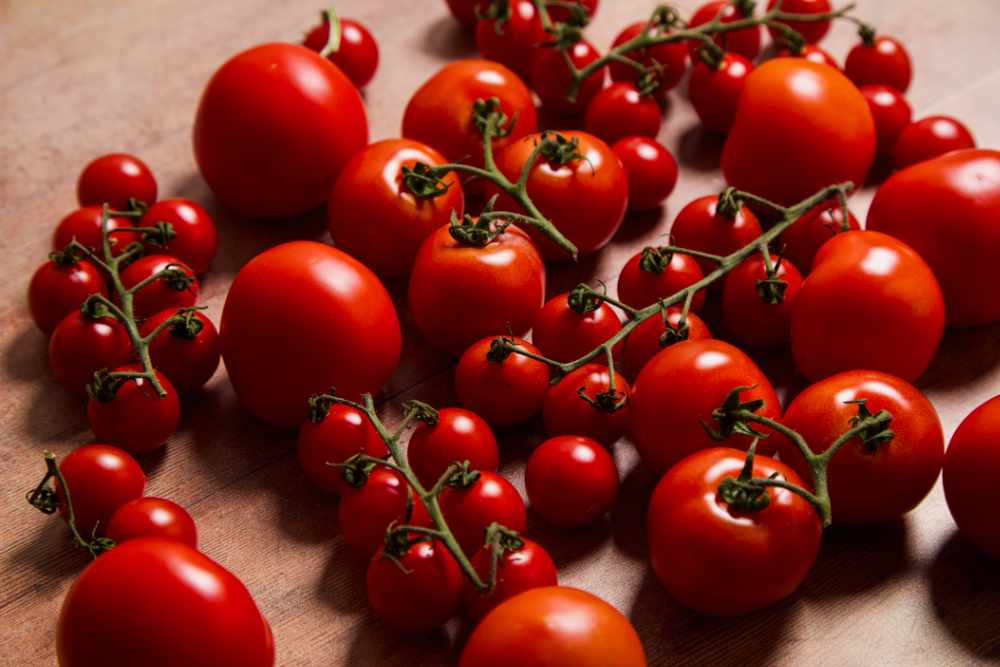
Cherry tomatoes are, generally, the sweetest tasting fruit. These small, juicy fruits come in a variety of colours including red, yellow or even chocolate and are perfect for hanging baskets and containers.
Standard tomatoes are the most common type being a medium size that makes them a good all-rounder. These types are most commonly red or yellow.
Plum tomatoes are a more elongated shape and are traditionally grown for making sauces and pastes because of their wonderful flavour that is balanced between sweet and sour. (might be nice to have illustrations to show different shape?)
Beefsteak are larger tomatoes that take longer to mature and are better suited to being grown in greenhouses and polytunnels where they benefit from the higher temperatures. These versatile fruits are also great sliced in sandwiches and salads.
How to Grow Tomatoes in Pots
1. If you are going to grow your tomatoes in pots for a patio or in hanging baskets, you should be looking at bush types like the cherry.
2. All you need to start are some small pots or a tray of modules and a warm windowsill.
3. In March or April, sow the seeds singly in the pots or modules about 0.5cm deep.
4. Water well (placing the pots in a water-filled tray to soak is a great idea).
5. Place them in a warm position where a temperature of 15 to 20C is ideal.
6. Once the seedlings have their ‘true leaves’ (the first leaves to appear when the seeds sprout are oval – these are called cotyledon – a few days later, a leaf that looks completely different will emerge. This is a true leaf), the seedlings should be transplanted to 9cm pots. This is called pricking out.
7. Fill the pots with compost, gently hold the seedlings by the leaves (never the stem as this will crush them) and plant them, deeply in their new pots.
8. Water them and place them somewhere warm and sunny.
9. The next stage is to gradually accustom your young plants to outside conditions. To do this, start moving the pots outside to a sheltered spot during the warmest part of the day (avoiding frosts) initially for a couple of hours but remember to bring them in at night. Gradually increase the length of time that the plants spend outside.
10. When the frosts are over, it is time to pot them up into their final containers whether these are patio pots or hanging baskets.
11. Enjoy bountiful crops of these tasty treats!
How to Grow Indeterminate/Cordon Tomatoes
1. Generally, though this is by no means a hard and fast rule, non-cherry tomatoes or cordon types perform best in greenhouses or polytunnels.
2. All you need to start are some small pots of compost and a warm windowsill.
3. Seeds can be sown between January and April thinly in the pots about 0.5cm deep.
4. Water them well (placing the pots in a water-filled tray to soak is a great idea), then place them in a warm position where a temperature of 15 to 20C is ideal.
5. Remember to keep the compost moist.
6. Once the seedlings reach 10-5cm tall they should be transplanted to individual pots.
7. Fill the pots with compost, gently hold the seedlings by the leaves (never the stem as this will crush them) and plant them, deeply in their new pots.
8. Water them and grow on in cooler, but not cold, conditions.
9. The next stage is to plant them out into growing bags or a greenhouse border.
10. These plants will need support in the form of canes, strings or frames.
11. You will need to pinch out any side shoots to encourage the plants to grow.
12. Once 5 or 6 trusses (branches that produce the flowers that will eventually lead to fruit) have set, pinch out the growing tip – this will encourage the plant to concentrate on producing fruit rather than growing any taller.
How to Look After Tomato Plants
If you are growing your plants in a greenhouse or polytunnel, you will need to make sure that there is plenty of ventilation. This not only helps to regulate the temperature but also allows access to pollinators.
If you are growing cordon (indeterminate) plants, remember to remove any side shoots that appear between the main stem and branches. These types will also need tying to supports regularly to both encourage growth and help support the weight of the fruit once it starts producing.
Once the first branch of flowers has appeared (these are called trusses), start to feed the plants every week with a good quality tomato food – we recommend using a high potash feed to promote bumper crops of tomatoes. You can use this on plants grown indoors or outdoors from Spring right through the growing season.
Watering of your plants is best done in the cool of the early morning or at dusk when evaporation rates are at their lowest and always water at the base of the plant not over it to avoid scorching the leaves.
Some Jargon Explained / FAQ’s
Pricking Out – This is when you move seedlings to larger pots to give them more space to grow.
Trusses – Branches of flowers or fruits.
True Leaves - When seedlings first sprout, they produce a set of oval leaves that are know as cotyledon. A few days after these, a single leaf will emerge that doesn't look like the first two and this is the first true leaf.
FAQs
When is the best time to sow tomato seeds in the UK?
Mid-March to late April.
Can you grow tomatoes outside in the UK?
Yes you can though, generally, you will get a better harvest from those grown in a greenhouse.
What is the difference between bush and cordon tomatoes?
A bush or determinate tomato will not require support and only grows to around 30-45cm making them ideal for pots, containers and hanging baskets.
How often should you water tomato plants?
There are many factors affecting when you should water your plants. Cherry (bush or determinate) tomatoes grown in containers or hanging baskets will need watering at least once a day (more often if the weather is particularly hot). Plants in the ground will need a good watering every 2-3 days.
When should you start feeding tomatoes?
It is best to start feeding your tomato plants once they have been planted out either into their containers or into the ground. Follow the instructions on your chosen feed to ensure the best results.
Should you pinch out tomato side shoots?
Yes. When growing cordon (indeterminate) tomato plants, pinching out the side shoots will encourage the plants to grow.
Why are my tomato leaves turning yellow?
It is always difficult to diagnose a problem without access to the actual plant but the most common causes are:
1. Over watering – this can actually suffocate the roots of the plant and the result can be the leaves of your plant yellowing.
2. Under watering – conversely, if your plants are under watered, the leaves can turn crispy and yellow.
3. Nitrogen deficiency – the plant concentrates on producing new growth so the lower leaves start to turn yellow as they are ignored.
4. The natural process of the plant aging – Normally, once the plant begins to produce fruit, the lower leaves often turn yellow and drop off. This is natural and not a problem.
5. Stress – When you transplant seedlings, they can often show signs of yellowing while they adjust to the new conditions. This should fade as the plants become more established.
Why are my tomatoes splitting?
Tomato plants are very sensitive to the regularity of watering so, if you don’t water your indoor plants for a period and then water heavily, the fruit can take up more water than the skin can accommodate so it will split. Outdoor plants could also be affected if there is sudden heavy rainfall after a dry spell.
Why are my tomatoes not turning red?
There are a number of possible causes behind why your tomatoes are not turning red. Extreme temperatures can stress the plants and retard the ripening of the fruit, an excess of nitrogen in the soil can have the same effect – this will probably be caused by using the wrong type of fertiliser where a high nitrogen feed has been used which encourages leaf growth rather than a high potash feed that encourages fruit development.
How can you prevent tomato blight?
There are a number of ways to help reduce the chances of blight developing on your tomato plants but, sadly, there is no sure fire solution. Here are a few things that you can try if you are worried about your plants:
1. Choose blight resistant varieties such as Cocktail Crush or Merrygold.
2. Prune back any leaves or branches that touch the soil to reduce the risk of contact with blight spores.
3. Add a 10-15cm deep layer of mulch (straw is ideal) around the base of the plants – this will reduce the chances of spores being splashed onto the plants during rain showers or when you water.
History of Tomatoes
Originally grown by the Incas and Aztecs, tomatoes first arrived on European shores in the 16th century though they weren’t grown commercially until the 19th century.
They are botanically defined as a fruit, this versatile plant is considered a vegetable by nutritionists and might throw a few people if it ended up in a fruit salad! The tomato is now one of the world’s most popular foods.